
YouTube Just Changed Its Monetization Rules for the First Time in 8 Years Here’s What It Means
YouTube has announced its biggest overhaul of creator monetization eligibility since 2018, and it’s set to reshape how new creators earn money on the platform starting in 2027. If you’re building a channel, thinking about starting one, or already earning through the YouTube Partner Program, this update directly affects you.
Here’s a complete breakdown of what’s changing, why YouTube is doing this, and what it means for creators at every stage.
What’s Actually Changing
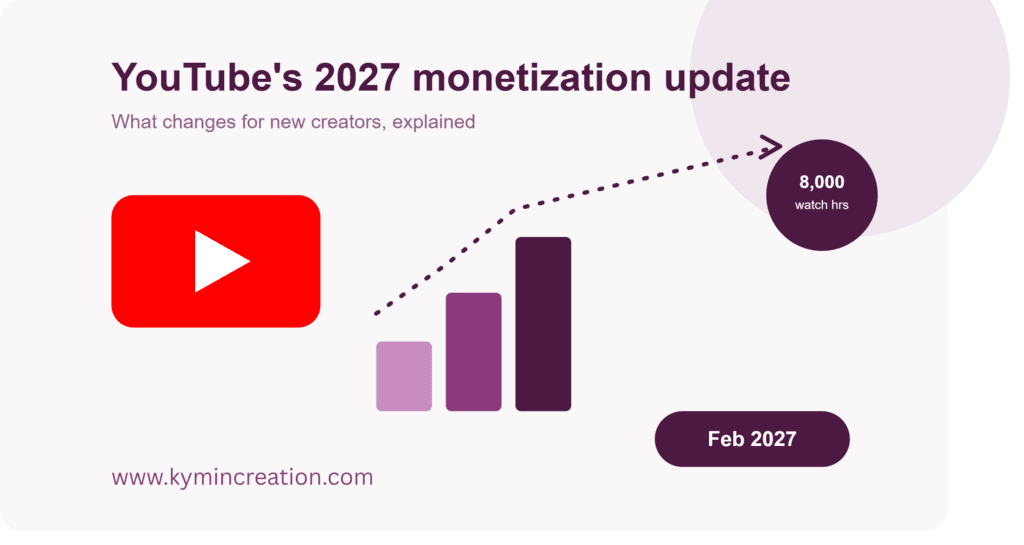
Google announced updates to the YouTube Partner Program (YPP) — the gateway creators need to pass through before they can earn ad revenue and YouTube Premium revenue share. The new rules take effect on February 1, 2027, and mark the first significant change to YPP entry requirements in nearly eight years.
The key numbers:
- New watch-hour requirement: 8,000 qualified watch hours within the previous 365 days
- New Shorts requirement (alternative path): 20 million qualified Shorts views within the previous 90 days
- Subscriber threshold: Still set at 1,000 subscribers
- Applicants only need to hit one of the two viewing thresholds, not both
To put that in perspective, this roughly doubles the current watch-hour bar most new creators know today.
Who This Affects — And Who It Doesn’t
This is the detail creators are searching for most, so it’s worth stating clearly:
- Existing YPP members are not affected. If you’re already approved and monetizing, these new thresholds don’t apply retroactively to you.
- New applicants from February 1, 2027 onward will need to meet the higher bar to get approved.
- Fan Funding and Shopping features keep their current entry requirements — this update is specific to ad and Premium revenue sharing.
So if you’re already in the program, nothing changes for you operationally. If you’re planning to apply after February 2027, you’ll need significantly more watch time or Shorts reach than creators needed in previous years.
Why YouTube Says It’s Doing This
YouTube has framed the change as a way to reward genuinely active creators and expand earning opportunities, rather than as a cost-cutting move. The company has also stated it expects to pay creators more in 2027 than it did in 2026, suggesting the goal is to concentrate revenue-sharing dollars among creators with real, sustained audience engagement rather than spreading it thinner across a growing pool of low-activity channels.
Shorts Revenue Is Also Getting a New Threshold
Alongside the entry-level changes, YouTube is introducing a separate rule for existing creators earning from Shorts:
- From February 1, 2027, creators will need 10 million qualified Shorts views over the previous 90 days to remain eligible for ads and subscription revenue sharing specifically on Shorts
- Falling below this threshold doesn’t remove you from YPP — you simply stop earning Shorts-specific revenue while continuing to earn from your long-form videos
- Shorts revenue sharing resumes automatically the moment your channel crosses back over the 10-million-view mark
- YouTube has indicated that creators already earning significant Shorts revenue are unlikely to be impacted by this change
New Ways to Earn Beyond Ads
For creators who fall under the Shorts threshold, YouTube says it plans to introduce new incentive programs rather than relying solely on advertising revenue. These are expected to include:
- Bonuses tied to YouTube Shopping performance
- Incentives for brand deal activity
- Earnings boosts for creators who start or grow trends on the platform
YouTube hasn’t released full details on these programs yet, but the direction signals a shift toward diversified income streams beyond straight ad-share payouts.
Premium Lite Is Expanding Too
In a related update, YouTube is rolling out Premium Lite to every country where YouTube Premium is currently available. A few details worth knowing:
- Premium Lite offers ad-free, offline, and background viewing for most content
- Creators earn a share of Premium and Premium Lite revenue based on member watch time and views
- The revenue split is 55% for long-form video and 45% for Shorts
- In India, Premium Lite is priced at ₹89 per month
This expansion effectively grows the pool of ad-free, revenue-sharing viewers creators can earn from a meaningful complement to the tighter YPP entry bar.
How This Compares to Other Platforms
YouTube isn’t alone in rethinking creator payouts. Around the same time as this announcement:
- X (formerly Twitter) revised its creator payout program to reward only original content
- Meta’s Facebook rolled out a new monetization program earlier this year aimed at attracting creators away from platforms like YouTube and TikTok
The pattern across platforms suggests a broader industry shift toward rewarding sustained, original engagement over raw upload volume or one-off viral spikes.
What Creators Should Do Now
If you’re building toward monetization or advising a channel that is, here’s how to think about the runway ahead:
- Applying before February 2027? The current, lower thresholds still apply — there’s a genuine incentive to reach eligibility before the deadline
- Building for the long term? Focus on watch-time retention over short-term view spikes, since 8,000 watch hours rewards consistent, engaging long-form content
- Leaning on Shorts? Track your 90-day rolling Shorts view count closely, especially once the 10-million threshold applies to revenue eligibility
- Already monetized? No immediate action needed, but keep an eye on how the new incentive programs (Shopping bonuses, brand deal incentives) roll out, since they may open new revenue lines even for smaller channels
The Bottom Line
This is YouTube’s most significant monetization policy shift in eight years, and it signals a platform-wide push toward rewarding depth of engagement over sheer reach. New creators will need to work harder to hit the entry bar, but the trade-off according to YouTube is a system built to pay serious creators more, not less, going forward.
Whether that promise plays out in practice is something the creator community will be watching closely as February 2027 approaches.