Diet Coke Marketing Strategy: How a Classic Brand Stays Viral in 2026
When it comes to legendary branding, The Coca-Cola Company has mastered the art of long-term marketing success. Among its strongest brand extensions, Diet Coke stands out as a powerful example of positioning, consumer psychology, and cultural relevance.
In this deep-dive blog, we’ll break down the Diet Coke marketing strategy, backed by real case-study insights, and explain how modern agencies like Kymin Creation can apply these principles for business growth.
Introduction to Diet Coke’s Market Position
Launched in 1982, Diet Coke quickly became one of the most successful product extensions in beverage history. Unlike traditional diet drinks, it was positioned as a lifestyle product rather than a “diet-only” solution, which significantly expanded its appeal.
Today, Diet Coke continues to dominate due to its strong branding, global distribution, and continuous innovation.
• Core Marketing Strategy of Diet Coke
• 1. Smart Brand Positioning (Not Just a Diet Drink)
One of the most critical aspects of Diet Coke’s success is its unique positioning strategy:
- Focused on taste and lifestyle, not just calorie reduction
- Marketed as a premium, stylish beverage
- Targeted both health-conscious and trend-driven consumers
Instead of emphasizing “diet,” Coca-Cola positioned it as “a great-tasting drink with fewer calories”, which broadened its audience significantly.
• 2. Deep Consumer-Centric Approach
Diet Coke’s marketing relies heavily on consumer insights:
- Continuous market research on taste preferences
- Adapting to health trends (low sugar, zero calories)
- Understanding emotional triggers and lifestyle habits
This consumer-first strategy allows Coca-Cola to stay relevant in an evolving market.
• 3. Strong Brand Identity & Visual Recognition
Diet Coke’s iconic identity plays a huge role in its marketing:
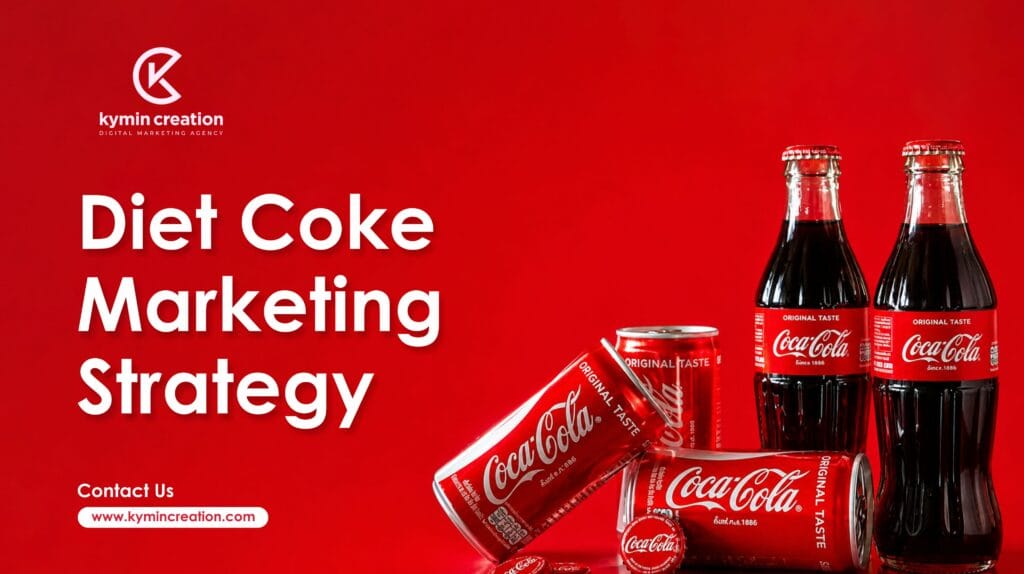
- Signature silver can design
- Minimalist and premium packaging
- Consistent branding across global markets
This creates instant recognition and reinforces brand recall across generations.
• Marketing Mix of Diet Coke (4Ps Explained)
• Product Strategy
- Low-calorie beverage targeting health-conscious consumers
- Multiple variants (flavors, packaging sizes)
- Continuous innovation aligned with trends
Coca-Cola offers a wide portfolio of beverages to cater to diverse preferences, with Diet Coke being a key product.
Table of Contents
• Pricing Strategy
- Competitive pricing to maintain accessibility
- Premium perception without being expensive
- Flexible pricing across regions
This balance ensures both mass appeal and perceived quality.
• Place (Distribution) Strategy
- Available in 200+ countries worldwide
- Strong bottling and distribution network
- Presence across retail, online, and food chains
Coca-Cola’s distribution system ensures products reach consumers efficiently at every touchpoint.
• Promotion Strategy
- Heavy investment in advertising and storytelling
- Use of celebrity endorsements and influencers
- Multi-channel marketing (TV, digital, social media)
Coca-Cola spends heavily on promotion to maintain brand visibility and emotional connection.
• Cultural & Pop Marketing Strategy
• 4. Collaborations & Pop Culture Integration
Diet Coke consistently stays relevant by collaborating with:
- Fashion brands
- Celebrities and influencers
- Entertainment industries
These collaborations position the brand as modern, trendy, and aspirational.
• 5. Localized Global Campaigns
Instead of one-size-fits-all marketing, Diet Coke adapts campaigns:
- Uses local languages and cultural elements
- Partners with regional influencers
- Customizes messaging per market
This strategy builds deeper emotional connections worldwide.
• Coca-Cola’s Advanced Strategic Framework
• 6. Segmentation, Targeting & Positioning (STP Model)
Coca-Cola divides its audience effectively:
- Youth and trend followers
- Health-conscious adults
- Lifestyle-driven consumers
Diet Coke specifically targets people seeking a balance between taste and health.
• 7. Brand Portfolio Strategy
Coca-Cola uses a multi-brand approach:
- Coca-Cola (mass audience)
- Diet Coke (health-focused segment)
- Coke Zero (taste-focused segment)
This segmentation avoids overlap and maximizes market coverage.
• Digital & Modern Marketing Evolution
• 8. Social Media & Influencer Marketing
Diet Coke thrives on digital platforms:
- Instagram-first campaigns
- Influencer collaborations
- Viral content strategies
Recent trends like customized beverages and viral “dirty soda” culture show how Coca-Cola adapts to digital consumer behavior.
• 9. Data-Driven Marketing & AI
Modern campaigns leverage:
- Consumer data analytics
- AI-driven personalization
- Predictive marketing strategies
This ensures campaigns are targeted, efficient, and high-converting.
• Emotional Branding & Storytelling
• 10. Building Emotional Connections
Coca-Cola doesn’t just sell drinks—it sells emotions:
- Happiness
- Lifestyle
- Social connection
Diet Coke campaigns often focus on confidence, independence, and modern living, making it more than just a beverage.
• Challenges Faced by Diet Coke
Despite its success, Diet Coke faces challenges:
- Declining soda consumption trends
- Increasing health awareness
- Competition from zero-sugar alternatives
Coca-Cola addresses these through innovation and repositioning strategies.

• Key Lessons for Businesses (By Kymin Creation)
If you’re a business owner, here’s what you can learn from Diet Coke:
• Actionable Marketing Insights
- Build a strong brand identity
- Focus on customer psychology, not just product features
- Use data-driven marketing strategies
- Stay relevant with trends and culture
- Invest in consistent branding and storytelling
At Kymin Creation, these same principles are used to help brands grow through SEO, social media marketing, and performance campaigns.
Conclusion
The success of Diet Coke is not accidental—it’s the result of decades of strategic marketing, innovation, and consumer understanding. From its iconic branding to its modern digital strategies, it remains a benchmark for marketers worldwide.
For businesses aiming to replicate this success, the key lies in understanding your audience, building a strong brand, and evolving with trends—exactly what agencies like Kymin Creation specialize in.
FAQs
1. What makes Diet Coke’s marketing strategy unique?
Its focus on lifestyle positioning rather than just being a diet product.
2. How does Coca-Cola promote Diet Coke globally?
Through a mix of digital marketing, celebrity endorsements, and localized campaigns.
3. What can businesses learn from Diet Coke?
Brand consistency, customer-focused marketing, and adapting to trends.